Rex Meikle
4/4/2020
As the last bit of ice on most lakes melts away, I find myself writing about one of my favorite things to do during the long, cold, dark winters of Wisconsin. I’ll be teaching you, the reader, how to fish for one of the best tasting, and nutritious fish found in the Midwest, the Lake Whitefish. This article is for the novice fisherman, or someone looking to get into fishing, without having to spend much money on the best gear, bait, or clothing. You may be wondering why? Why is knowing how to ice fish, or more specifically, ice fish for Whitefish an important skill to learn? Well, I’ll tell you why. Being able to harvest your own, healthy, sustainable food is very important. When times get tough financially, or food is scarce, having a freezer full of locally sourced, wild, organic food is very valuable. Having the knowledge and skill to harvest your own food can provide a sense of safety and security that you can live with. Secondly, Lake Whitefish is incredibly healthy. Whitefish is high in omega-3, protein, and relatively low in calories. The taste is what truly sets whitefish apart, the soft, white, large flake, fillets of this delicacy taste truly delicious. For more about eating Lake Whitefish look at https://eatwisconsinfish.org/fish-list/lake-whitefish/ . Lastly, knowing how to ice fish is important so that you have a healthy hobby to get through the long Midwest winters. To escape the cabin fever, turn off your TV and video games, and get outside, socialize with others, and fish. Ice fishing can be a mentally and physically positive activity to engage in during the cold winter months.
Before you jump hook line and sinker into this article, first I have laid out a materials list of essential items needed to ice fish for Whitefish.
Tackle:
Ice fishing rod- A medium action to medium light action works best. You need a rod that is sensitive enough to feel the bite, but strong enough to set the hook and land the fish.
Reel- A spinning reel equipped with monofilament (8-15lb test), or braided line (10-30lb test) with a fluorocarbon liter leading to lure would be best.
Bait/Lure- A small spoon (Swedish pimple), or Rapala Jigging Rap (use a smaller 1 ½-2 ½ inch size), and wax worms from a local bait shop are a must. As far as color goes, gold, blue/purple, and white have been the most successful for me. Fish can be color specific some days where they only bite on one color.
Clothing:
Bibs- They need to be able to cut the wind and be waterproof or somewhat waterproof at pant bottoms.
Boots- They should be above ankle, insulated, waterproof, and comfortable.
Socks- Large wool socks are recommended to stay warm.
Jacket- It needs to be able to cut the wind, and have pockets, a hood is always a good plus as well.
Sweatshirt/Sweater- A warm, thick, water resistant material with hoodie, or thick wool sweater would be my recommendation.
Hat- It needs to cut wind and cover your ears.
Mittens- They need to be waterproof, lined, and big enough to wear thin gloves under.
Why so much wool? Wool is one of the only materials that will keep you warm even if it gets wet, in fact it keeps you warmer when it is wet. If worst case scenario you get wet, wool will keep you warmer than any other material. For more on wool visit https://survivalcommonsense.com/best-winter-clothing-fabrics/.
Other Materials:
5-gallon bucket- For carrying your gear out, and then sit on top of.
Seat pad- They keep your butt warm, add comfort, and increase the time you are able to stay out fishing.
Ice pick/auger- An auger will drill holes faster, but requires fuel, know how, and sometimes can be unreliable. On the other hand, an ice pick only needs a little effort, and warms you up in the process.
Ice scoop- To get ice out of fishing hole without using your hand.
Crampons- Should be put on under boots to increase traction and decrease slipping.
Food and water- Bring along to keep you hydrated and energized for prolonged fishing.
Hand warmers- Use when you just can’t take the cold anymore.
Now that we know why it is important to know how to fish for Whitefish, and we know the materials necessary, let’s get into the procedure of how to fish for Whitefish.
Step 1: Plan
Step one is to find a depth map of the area you are fishing. On the map you need to find areas where the depth goes from very deep to drastically shallow. Such areas are called shoals, or shelves and Whitefish feed on prey on the steep bottoms of these features. Locate one that is close to shoreline if possible. Finding a close spot reduces walking distance, and if something were to go wrong it is safer to be close to shore. https://www.oceangrafix.com/chart/zoom?chart=14910 here is a map of the bay of Green Bay one of the best places for fishing Whitefish in the Midwest, and the area in which I fish for Whitefish personally.
Step 2: Find a partner
Step two is self-explanatory, find a partner. It is much safer to fish with someone else and to bring a cell phone with you. You want to bring someone with you that you trust, and preferably someone with as much, or more fishing knowledge than you. Once you have a good partner you can enjoy years of fishing with him or her. If you do not bring a partner you need to bring a cell phone and tell a reliable person when you are departing and when you will return by, as well as where you are going.
Step 3: Wake up early
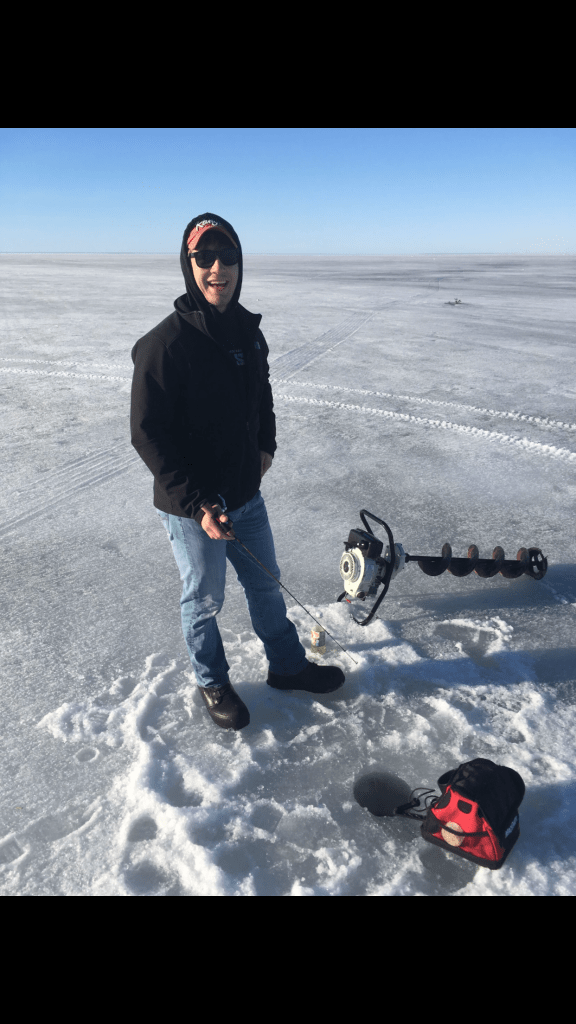
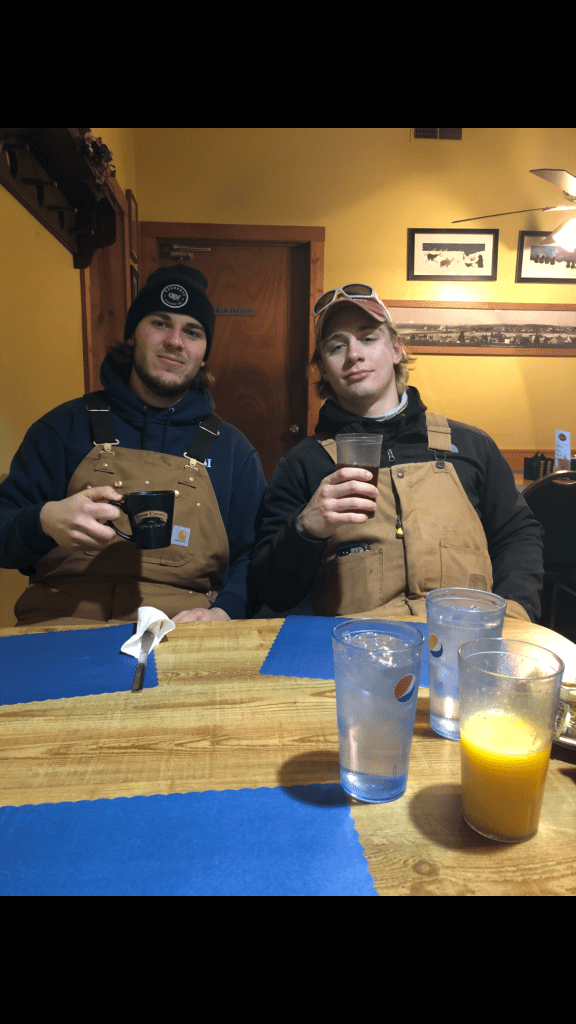
Step three is critical to success as Whitefish feed most actively in the morning. The best time to be fishing for them is from 9-11 am, 10 am being the peak. You need to be on the ice and actively fishing at this time so figure out what time you need to wake up to get ready, pack, eat, drive, find a parking spot, walk out, and set up. Generally waking up at 6:00-6:30 is a good time to be up by if your fishing spot is within a 15 minute drive and the walk out to the spot takes no longer than 20 minutes. It is always a good idea to eat some breakfast before going out as well, coffee never hurts either.
Step 4: Arrival and Set Up
Drive to a public boat launch, or park where you can legally park and pay dues if needed. Next you will have to check ice conditions prior to walking out. This can be done online, or by asking fellow fishermen. When walking out stay on ice roads or trails. Do not walk near islands, points, moving water, cracks, or ice shelves as they often have unsafe ice. Find your previously selected spot and move at least fifty feet from other fishermen. Drill your hole or chip it out. Your hole for Whitefish should be at least 6 inches in diameter, but can be up to 10 inches wide. Tie your selected lure onto your line with a fisherman’s knot. If you need help with the fisherman’s knot click this link https://www.wroxx.com/tie-fishermans-knot/. Fill lure’s hooks with wax worms, Whitefish love wax worms.
Step 5: The drop
Sit down on your seat cushion atop your trusty five-gallon pale a comfortable distance away from your hole. Next drop your line down the hole. Reference the spinning reel diagram if needed http://www.seafishinghowto.com/fishing/articles/types-of-fishing-reels.html. By spinning the drag mechanism, adjust the drag of your line so that it can pull out without breaking, but not allowed to pull out very easily. By lifting the bail arm drop the line into your hole. You want your lure to hit the bottom. Once on the bottom flip the bail arm on your spinning reel back over and reel clockwise until line is tight.
Step 6: Jigging
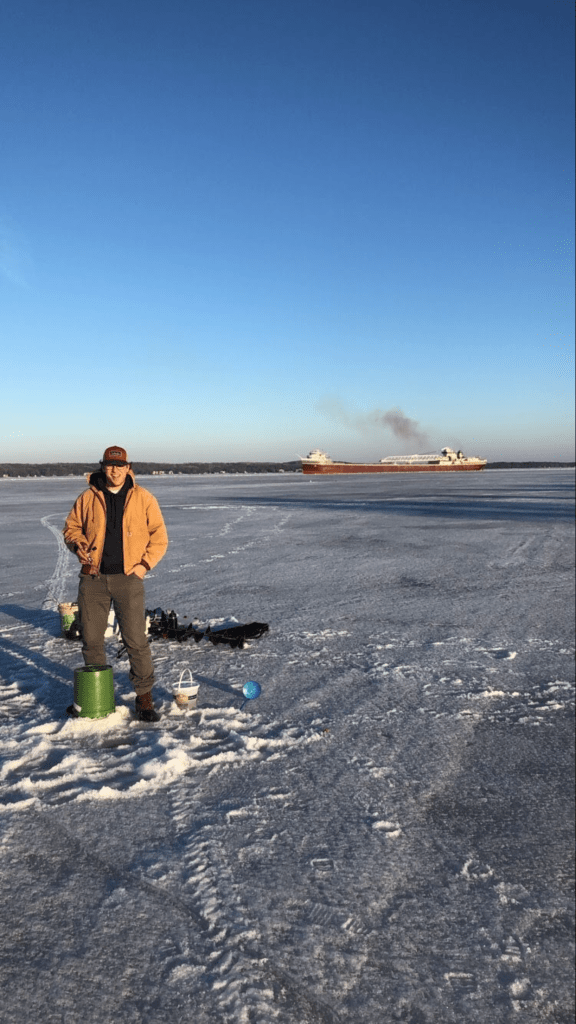
Once your lure is on bottom, drag is adjusted accordingly, and line is tight the next step is to jig. Jigging is the process of lifting your lure up and down to attract fish. Whitefish are a species that eat off the lake bottom, so jigging is essential to being successful. You want to make fluid, consistent lifts of the rod up and down. Around three jigs per ten seconds is a good tempo to jig at. You want to really focus on lifting that lure up and letting it hit the lake bottom hard. By hitting the lake bottom hard it will create a cloud of sand, or sediment, this mimics what happens when schools of baitfish or other prey gather at the lake bottom. Whitefish are naturally attracted to this. In addition, the vibrations of the lure hitting the bottom draws in fish as well.
Step 7: The catch
You are jigging along as instructed when suddenly, bam, you feel a pull on your line. What do you do? You are taken by surprise, excited, and caught off guard. At this moment you need to set the hook. This saying means to tighten up the loose line and lift the rod tip up abruptly. By tightening the line and lifting the rod quickly you drive the hook deeply into the mouth of the Whitefish. Next you need to reel clockwise and keep the rod tip pointed upwards to prevent the fish from spitting out the hook or shaking loose. When you get the fish to the hole you need to watch that the line doesn’t rub against the sharp edges of the hole. You want to get the fish’s head into the hole facing upwards towards you. Grab the fish by the head or use a scooping motion to get the fish out of the hole and on top of the ice. Remove the hook from the mouth of the fish and by looking your local regulations decide if you can legally keep the fish. Then, decide to keep the fish, or not. If you decide to release the fish place the fish back in the hole gently with the fish entering headfirst.
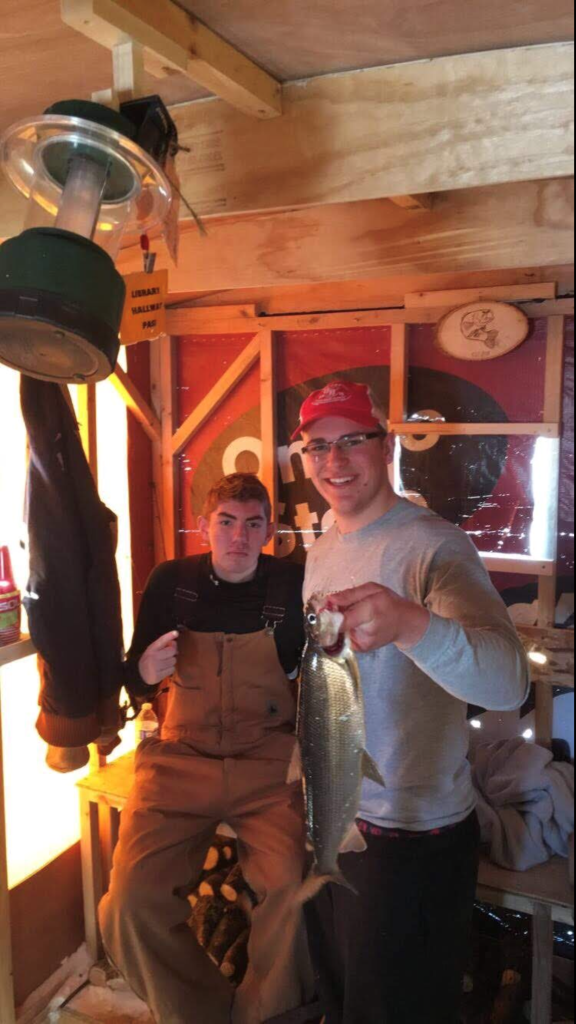
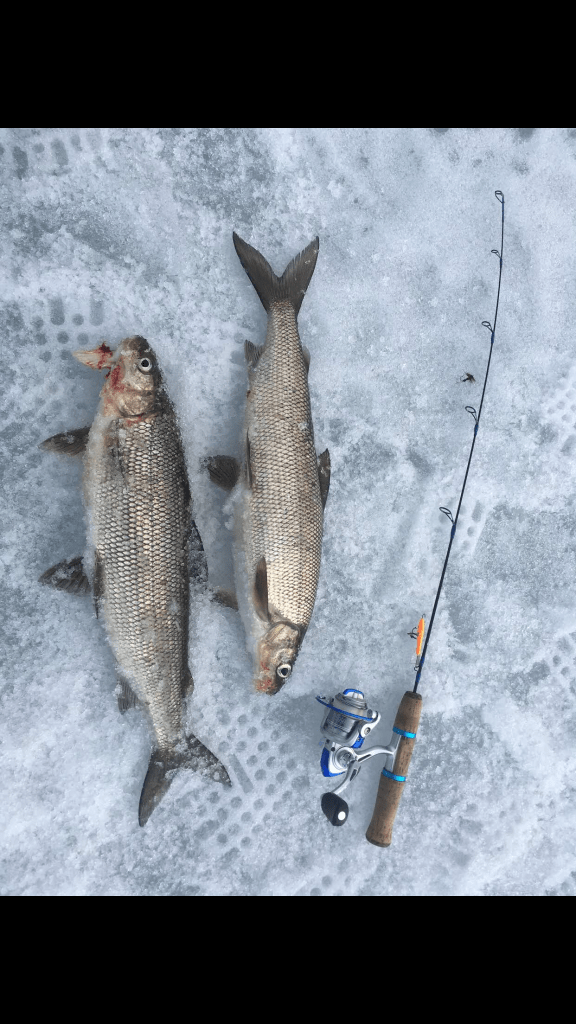
Congratulations! You now know how to ice fish for Whitefish. From materials needed, planning, set up, fishing techniques, and finally, to how to land a big one. I hope that you take away something positive from this article. Next winter, find a buddy, grab a rod and bucket, and get out on the ice to wet a line. Happy fishing!
References
Eat Wisconsin Fish. (n.d.). Lake whitefish – Eat Wisconsin fish. Retrieved from https://eatwisconsinfish.org/fish-list/lake-whitefish/
Leon, L. (2019, September 18). Best outdoor clothing fabric for winter and summer. Retrieved from https://survivalcommonsense.com/best-winter-clothing-fabrics/
Oceangrafix.com. (n.d.). Nautical chart viewer: Lower green Bay;Oconto Harbor;Algoma. Retrieved from https://www.oceangrafix.com/chart/zoom?chart=14910
Sea Fishing How To. (n.d.). Types of fishing reels – Baitcasting, spinning, Spincasting, electric and other reels. Retrieved from https://www.seafishinghowto.com/fishing/articles/types-of-fishing-reels.html
Wroxx. (2018, March 8). How to Tie a Fisherman’s Knot. Retrieved from (https://www.wroxx.com/tie-fishermans-knot/
 RIPE Magazine | Volume 1